
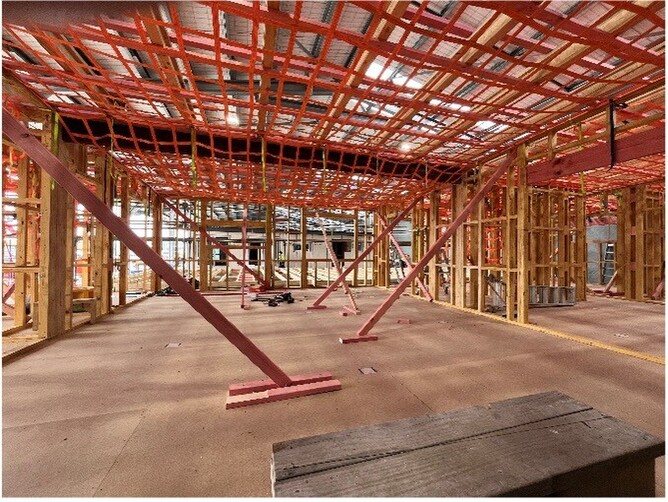
In September, we issued the final version of our housing report “Hiding in Plain Sight: The Real Cost of Housing in Waikato”. We also hosted a webinar that month where Quanita Ali took participants through the findings of the research. Since the start of the year, we have wanted to not only describe the problem, but to contribute to its solution.
As we described in our October update, in partnership with the Waikato Housing Initiative and Futureproof, we have commissioned Veros Ltd to identify and help advance real world solutions on what it would take to improve housing affordability in the Waikato region, addressing the issues identified in the above report.
Hardworking Waikato families like truck drivers, teachers, nurses, and customer service reps are struggling to afford housing. These households typically earn $90,000 – $120,000. They don’t qualify for, and shouldn’t need, government support. In a well-functioning market, they’d manage without support but the system isn’t working.
The standard measure of affordability “the 30% rule” says housing costs shouldn’t exceed 30% of gross income. This means the typical Hamilton household can only afford a home around $560,000. Yet of 3,200 homes for sale in Waikato, only 14% fall within that range and most of those 460 homes aren’t where or what people need.
This is forcing people to buy what they can’t afford. In September 2025 the typical Waikato household on average paid $180,000 above what’s considered affordable for their income, a 33% overspend. This means less money for healthcare, education, and in the savings pot for retirement.
So, what can we do to make housing more affordable for typical New Zealanders? The answer isn’t simple. Housing is complex, with many interconnected factors and there is no silver bullet. This challenge is global and many organisations are working hard to solve it.
This piece of work aims to help and takes a private-sector lens on the problem. It seeks to help improve affordability for everyday people in the Waikato. While focused on private market housing, the insights and actions are relevant across the housing continuum, including iwi. This work does not aim to ‘boil the ocean’, but rather to develop a practical, data-driven Investment model that identifies commercially feasible pathways for delivering affordable rental and ownership housing to middle-income households in the Waikato region.
The work has been progressing well, and the Veros team have engaged with a very wide range of leaders in the housing system across the Waikato including land and housing developers, banks, community housing organisations, iwi, council officials, councillors and home buyers.
The three key insights from the work so far are:
1. Delivering Affordable Homes is like ‘Death by a Thousand Cuts’
The development process is long, uncertain, costly and risky. Every participant feels the impact:
councils managing complex consents
developers rezoning land
builders delivering new homes
everyday “mums and dads” trying to subdivide their property.
Layers of red tape, risk-averse decision-making, and requirements for high-quality amenity and construction standards while essential for safe, healthy, and attractive neighbourhoods come at a significant cost to affordability. These processes add time, increase risk, and drive up costs, ultimately reducing supply and worsening the affordability challenge.
2. Affordability Means Building Smaller, Smarter Homes
Over the past decade, the cost of a new home has surged dramatically. One example which is a three-bedroom standalone home shows a 130% increase, rising from $350,000 to $815,000, while the Consumer Price Index grew by just 35%. This gap highlights the scale of the affordability challenge.
Reducing prices is extremely difficult. There are significant wage growth pressure, material costs remain high due to reliance on imports, business expenses continue to rise, and complex processes add layers of cost and risk. These factors make significant price reductions unrealistic.
This means to deliver cheaper homes, we need to build smaller homes. However, these homes need to meet the requirements of different people because “one size does not fit all”.
A mix of typologies is needed, including granny flats, duplexes, townhouses, apartments, multi-generational homes and retirement villages. This will better meet the needs of everyone, particularly as our ageing population occupies larger homes that families need.
3. Buyer Mindset + Market Demand Matter
Housing costs have far outpaced wage growth, making the first home many hardworking Kiwis aspired to a decade ago unattainable. Prices are unlikely to fall significantly and is forcing buyers into homes they cannot afford.
Part of the solution sits with the buyer’s choice and education. We need financial literacy and a willingness to embrace affordable, smaller, smarter homes.
In delivering affordability in face of rising house prices ‘new builds’ become a powerful tool. On the demand side, most lenders require only a 10% deposit for new homes compared to 20% for existing properties. That’s half the time to save, and this speed can make the difference between getting on the ladder or missing out entirely, as house prices historically rise faster than incomes.
On the supply side, new smaller homes add much needed stock to help stabilise prices. But people need to want new homes and importantly understand how to buy them. Financial literacy and confidence in off-the-plan purchases will create the real demand developers need from lenders to deliver smaller, more affordable homes.
From these insights, we are developing a small set of key moves which will positively address these insights. These will be described in detail in a key moves document and well as an overall findings report. A technical report will provide further detail. These reports are currently in development and will be shared with key stakeholders in January 2026.

Importantly from there, we are looking to roll out a roadshow to share these findings and build support for their implementation across the Waikato region (and perhaps beyond).
If you are interested in hearing from us about the results of this work, or to contribute feedback to the proposed key moves, please contact Harvey at harvey.brookes@waikatoregion.govt.nz
