By Hera Denton
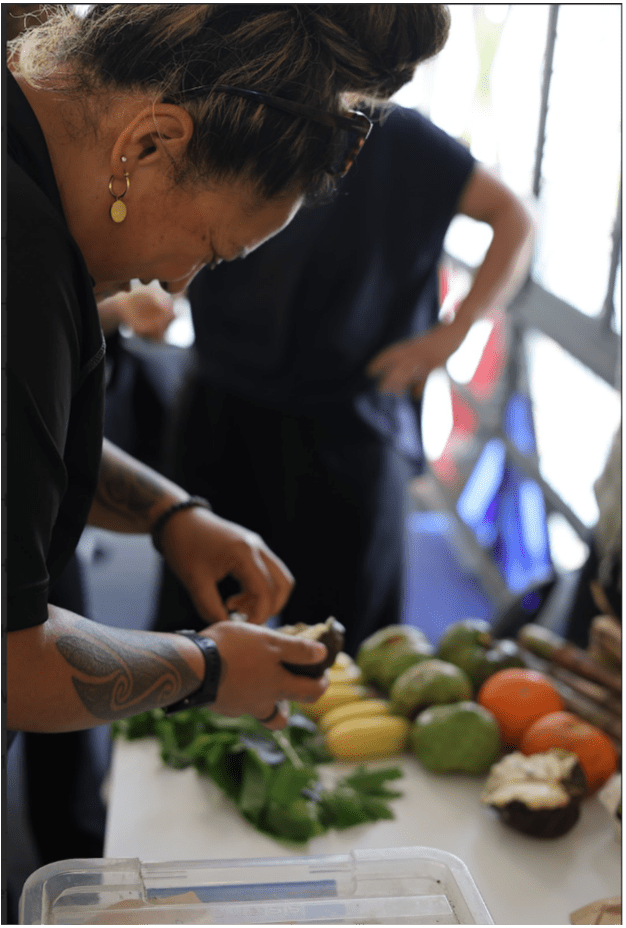
The Waikato Kai Hui 2025 was co-hosted by Waikato Tainui, GoEco and the Waikato Wellbeing Project. The hui brought together a diverse collective of kai leaders from across the region — whānau, hapori practitioners, growers, educators, researchers, and small-scale pākihi. The energy and engagement throughout the day reflected a strong, shared commitment to strengthening kai systems grounded in mātauranga and community resilience.
The hui affirmed that our region holds both the desire and the capability to build a thriving, values-based kai system. The voices captured through this hui make it clear that whānau, hapori, and practitioners are ready for coordinated action, practical support, and spaces that honour mātauranga Māori. With continued investment in relationships, learning pathways, and shared infrastructure, Waikato has the potential to lead nationally in kai motuhake.
As we look ahead, there is strong momentum and appetite to deepen this kaupapa. With the right support, we intend to host a larger, two-day regional hui in May 2026 — an opportunity to bring even more whānau, hapori, practitioners, and partners together to consolidate learning, showcase innovation, and progress the collective strategy emerging from this work.
This hui was not an end point, but the beginning of a long-term, community-driven movement — one grounded in collective strength, cultural identity, and a shared vision for the wellbeing of our people.
Participants spoke openly about both the opportunities and barriers they experience in their mahi. Several consistent themes emerged:
A desire for stronger collaboration and regional coordination to reduce duplication and enhance collective impact.
A clear need for practical support, including accessible resources, maramataka-aligned learning, seed saving, maara design, and capability-building for whānau.
A strong appetite for continued wānanga and hui, reinforcing that connection is a critical enabler of kai motuhake.
What stood out most was the recognition that our communities hold the solutions. The hui demonstrated that the knowledge, relationships, and whakaaro needed to advance kai motuhake already exist within our region — and that with the right support, these can be woven together to create a powerful, long-term movement.
This event has laid the foundation for a coordinated regional approach, and the feedback signals a clear mandate to continue investing in the relationships, infrastructure, and learning pathways that will enable whānau and communities to thrive.

Reflections And Kōrero Gathered At The Hui
As part of the hui, participants were invited to share their reflections on what supported their mahi and where further collective effort is needed. Their feedback provides valuable insight into the current realities of our regional kai system and highlights the areas where coordinated action will have the greatest impact. The themes below summarise what we heard across all voices and help to guide the next stage of the kaupapa.
Strengths Of The Hui
Whanaungatanga remained the biggest success — participants felt held, welcomed, and connected.
The calibre of speakers and workshops brought mana-enhancing mātauranga.
Many described the atmosphere as “powerful,” “significant,” “safe,” “uplifting,” and collective.
Being among “like-minded people” was transformational.
Needs Identified Across All Responses
Regular hui and learning spaces
National + regional resource hub
Simple, kaupapa Māori–led tools and templates
Support to feed whānau AND build long-term capability
Space for diverse iwi, hapū, and rohe perspectives
Clear, ongoing communication
Opportunities for collaboration, mentoring, and networking
Stronger maramataka, seed-saving, maara, and kai preservation learning opportunities
Support with motivation, confidence, and getting started
A place for whānau to gather, ask questions, and learn from each other
Opportunities For Us Moving Forward
Build a Waikato-based movement with national relevance
Develop a hub that can eventually connect with other regions
Create practical “starter kits” for whānau, marae, hapori
Bring iwi and hapū identity into the centre of the kaupapa
Build a library of Māori-led resources that are simple, accessible, and values-aligned
Continued deep dives into mātauranga — not just skills-based workshops
How We Can Best Support Whānau In Their Mahi
Make the pathways easy and accessible - simple templates, tools, guides, and starter packs.
Build online space for kai Motuhake - somewhere people can return to, contribute to, and navigate easily.
Celebrate each iwi, hapū, and whānau voice - ensure the movement is not over-centralised — but woven.
Make the movement visible and coordinated – a regional network, clear pathways, shared actions, and regular updates.
Embed learning opportunities across the year - whānau want skills, confidence, and mātauranga.
Key Insights From The Waikato Kai Hui
Insight 1: Whānau want collective action, not siloed projects.
Insight 2: There is a need for simple, Māori-led tools and resources to guide action.
Insight 3: Identity matters — people want to bring their full whakapapa into the kaupapa — not just their roles or organisations.
Insight 4: We need a regional hub with national relevance and “one stop shop” simplicity.
Insight 5: Safe, kaupapa Māori–aligned spaces are crucial for motivation and trust.
Insight 6: Whānau are ready to learn, share, grow, and move — together.
Next Steps
1. Build the Waikato Kai Motuhake Network - continue connections regionally and link to national networks.
2. Develop a “One Stop Shop” Kai Motuhake Online Hub - must include:
Directory and events calendar
National and regional resources
Templates whānau can adapt
Seed-saving and maara guides
Spaces for sharing stories, pātai, inspiration
3. Create Toolkits and Starter Packs. Examples:
“Start Your Maara” pack
“Maramataka for Beginners” guide
“Seed Saving Basics” booklet
4. Continue Seasonal Wānanga and Hui - more learning around maramataka, maara design, stages of regenerative kai growth, harvest and preservation.
5. Strengthen Communities of Practice, especially:
Seed saving
Various roopu growing and sourcing kai
Hapori led kai collectives
Sharing kai and resources
6. Develop a Kai Motuhake Pathways Map - a visual “where to from here” guide created alongside whānau, hapori and pākihi.
If you would like to know more and join the Waikato kai Motuhake movement, please contact Hera Denton at: hera@envirocentre.org.nz